





 English
 USA
USA
 西班牙语
西班牙语
 俄罗斯
俄罗斯
 葡萄牙
葡萄牙
 印尼
印尼
 巴基斯坦
巴基斯坦
 尼日利亚
尼日利亚
 孟加拉
孟加拉
 墨西哥
墨西哥
 越南
越南
 日本
日本
 韩国
韩国
 沙特阿拉伯
沙特阿拉伯

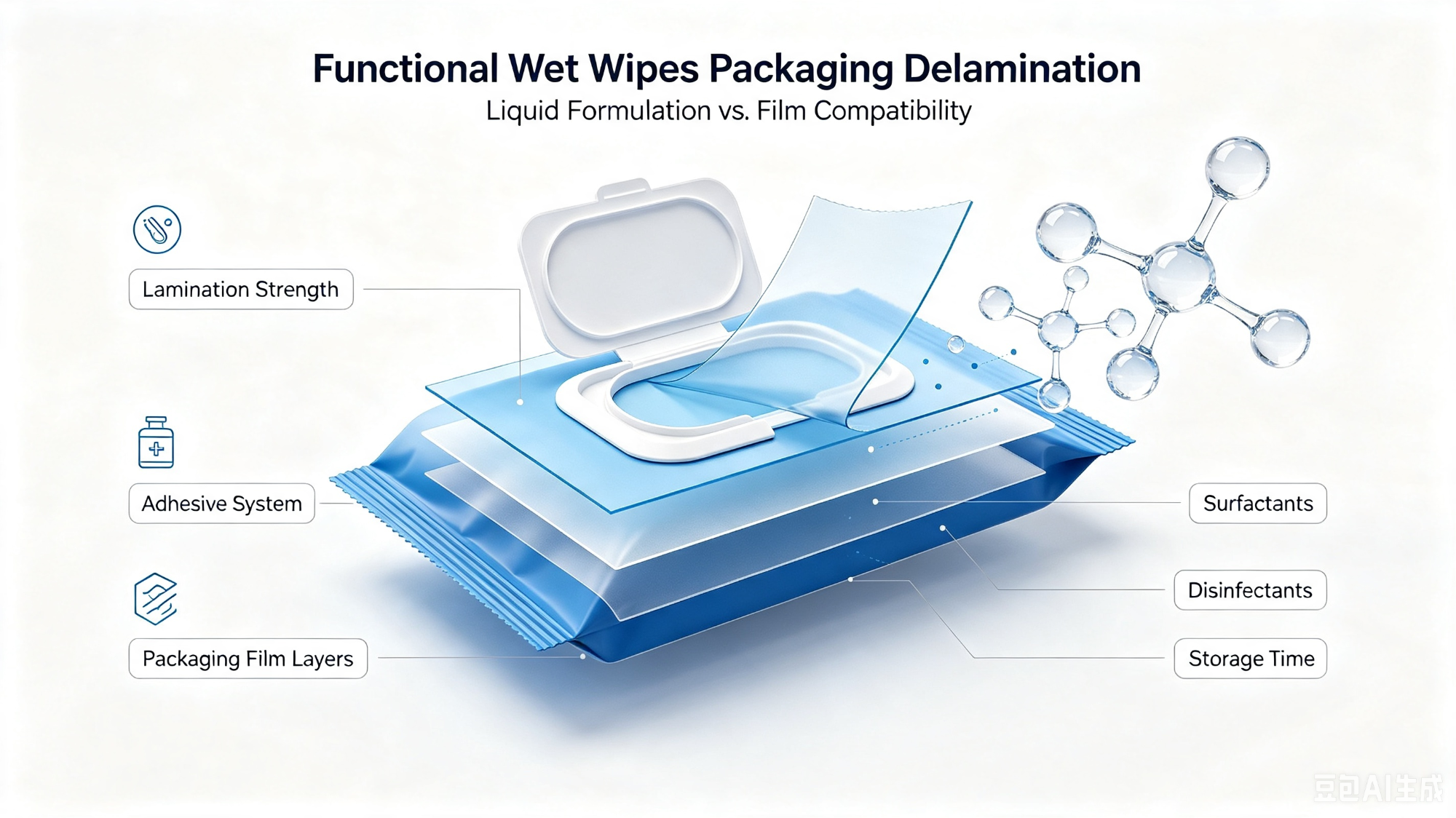
The Hidden Connection Between Wipes Liquid Formulation and Packaging Film Performance
In the wet wipes industry, manufacturers usually pay close attention to the quality of nonwoven fabric, wipes liquid formulation, preservatives, and production processes. However, there is another issue that is often overlooked:
Why do some baby wipes remain perfectly stable, while functional wipes such as kitchen wipes, disinfecting wipes, and cleaning wipes develop packaging film delamination after storage?
Recently, we have received feedback from several wet wipes manufacturers:
Baby wipes packaging works normally.
The production process is smooth.
Finished products look perfect immediately after packaging.
However, after several weeks or months, functional wipes packages show problems such as:
Film layer separation
Packaging peeling
Poor lamination strength
Leakage risks
Many manufacturers initially suspect:
"Is there a problem with the packaging film?"
"Is there a problem with the wipes liquid formulation?"
In most cases, the real reason is not a single material problem. It is related to the compatibility between the laminated packaging structure, adhesive system, and functional wipes liquid formulation.
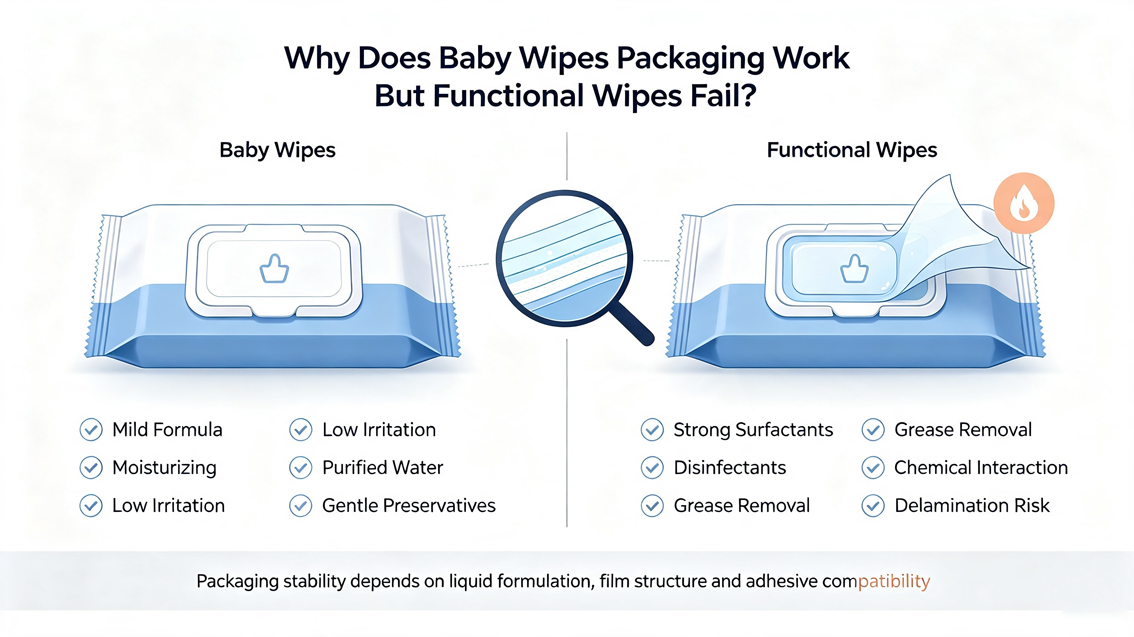
Why Does Baby Wipes Packaging Work But Functional Wipes Fail?
At first glance, baby wipes and functional wipes may use similar packaging materials. However, their liquid formulations are completely different.
Baby Wipes Usually Have a Mild Formula System
Baby wipes liquid formulations are generally designed around:
Gentle cleansing
Moisturizing
Skin protection
Low irritation
Typical ingredients include:
Purified water
Humectants
Mild surfactants
Botanical extracts
Skin-conditioning ingredients
Gentle preservatives
These formulas usually have relatively low chemical interaction with packaging materials.
Therefore, even if the packaging film adhesive system is designed according to standard parameters, it can often maintain stability.
Functional Wipes Have More Complex Chemical Systems
Functional wipes, such as:
Kitchen cleaning wipes
Disinfecting wipes
Antibacterial wipes
Pet wipes
Industrial cleaning wipes
often contain stronger functional ingredients, such as:
Surfactants
Solvents
Antimicrobial ingredients
Alkaline cleaning agents
Chelating agents
Essential oils
High-performance cleaning additives
These ingredients can create higher requirements for packaging materials and lamination adhesives.
If the packaging structure is not designed specifically for these formulations, long-term storage may cause:
Adhesive softening
Reduced bonding strength
Layer separation
Film peeling
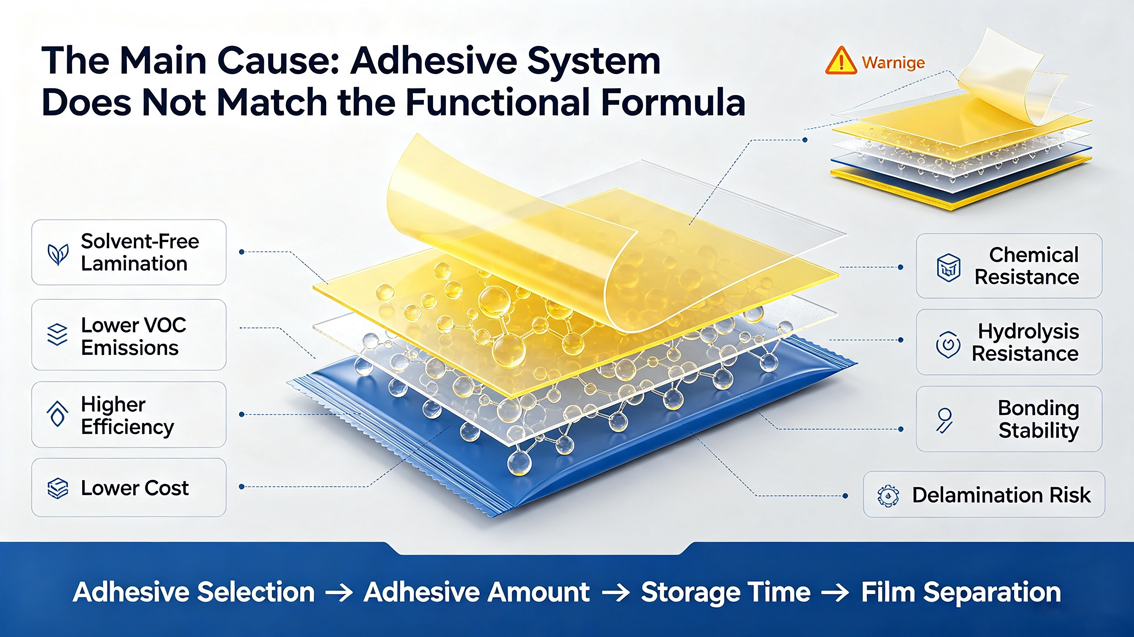
The Main Cause: Adhesive System Does Not Match the Functional Formula
Currently, many wet wipes packaging manufacturers use:
Solvent-Free Lamination Technology
Solvent-free lamination has become increasingly popular because of:
Lower environmental impact
Higher production efficiency
Reduced VOC emissions
Lower processing costs
However, solvent-free lamination is not suitable for every type of wipes liquid formulation.
The key factors include:
1. Adhesive Selection
Many printing and packaging suppliers select adhesive systems based on general recommendations from adhesive manufacturers.
For baby wipes, this approach often works.
But for functional wipes, the adhesive must have:
Higher chemical resistance
Better hydrolysis resistance
Stronger bonding stability
Compatibility with specific liquid ingredients
If standard adhesive is used for aggressive formulations, problems may appear later.
2. Adhesive Application Amount
Another critical factor is:
The amount of adhesive applied during lamination.
The adhesive dosage needs to match:
Film structure
Functional ingredients
Liquid loading rate
Storage conditions
Expected shelf life
If the adhesive amount is too low:
Initial bonding may look acceptable
Finished packaging passes production inspection
But bonding strength gradually decreases during storage
Eventually, film delamination occurs.
Why Does The Problem Appear After Several Months?
A common misunderstanding is:
"The packaging was fine when produced, so the packaging material must be OK."
Actually, this is not always true.
Immediately after packaging:
Adhesive has not fully interacted with the liquid environment.
Chemical migration has not occurred.
Long-term stress has not developed.
During storage:
The wipes liquid continuously contacts the inner packaging layer.
Over time:
Functional ingredients penetrate the packaging structure.
Adhesive performance gradually decreases.
Lamination strength drops.
Film layers separate.
Therefore, the product may pass factory inspection but fail during shelf-life testing.
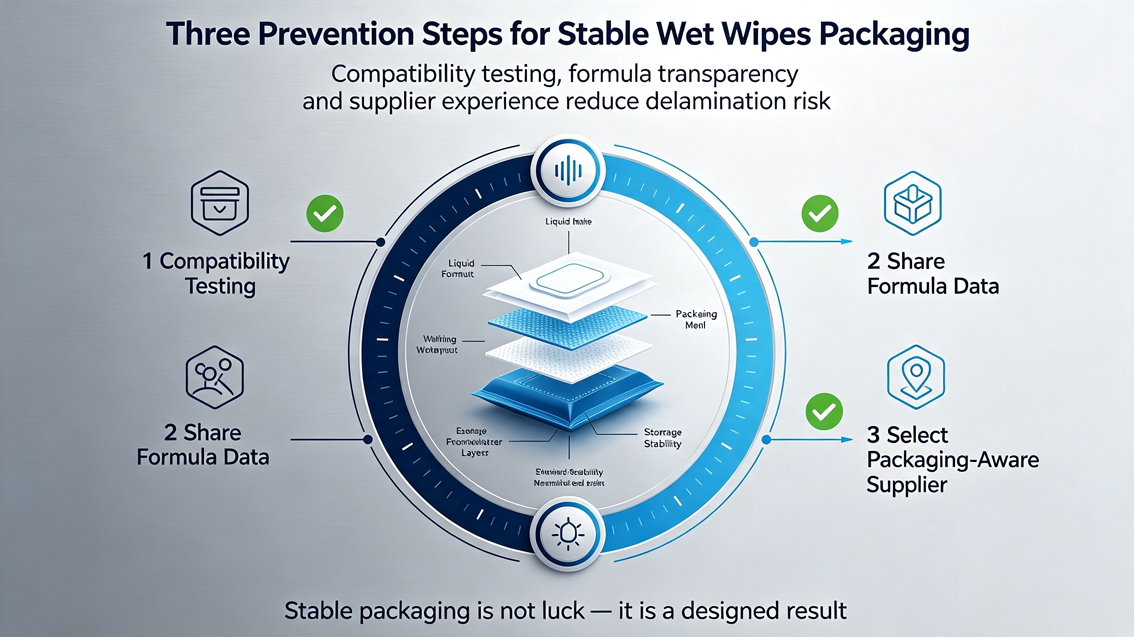
Is It A Packaging Film Problem Or A Wipes Liquid Formulation Problem?
The answer is:
Usually, it is a compatibility problem between the wipes liquid formulation and packaging lamination system.
A high-quality wipes liquid formulation should not only consider:
Cleaning performance
Antibacterial efficiency
Skin safety
Regulatory compliance
It should also consider:
Packaging compatibility
Film material selection
Storage stability
Similarly, packaging suppliers should not only provide standard film structures. They need to understand the chemical characteristics of the wipes liquid.
How Can Wet Wipes Manufacturers Prevent Film Delamination?
1. Conduct Compatibility Testing Before Mass Production
Before launching a new functional wipes product, manufacturers should test:
Finished package aging test
Lamination strength test
Chemical resistance test
Accelerated storage test
Do not rely only on short-term production inspection.
2. Communicate Formula Characteristics With Packaging Suppliers
When developing functional wipes, provide information about:
Main active ingredients
Solvent content
Surfactant level
pH range
Essential oil content
This helps packaging suppliers select the correct adhesive system.
3. Choose a Wipes Liquid Supplier With Packaging Experience
A professional wipes liquid formulation supplier should understand not only chemistry but also the entire wet wipes production process.
A successful formulation requires balance between:
Formula performance
Preservation system
Nonwoven compatibility
Packaging compatibility
Shelf-life stability
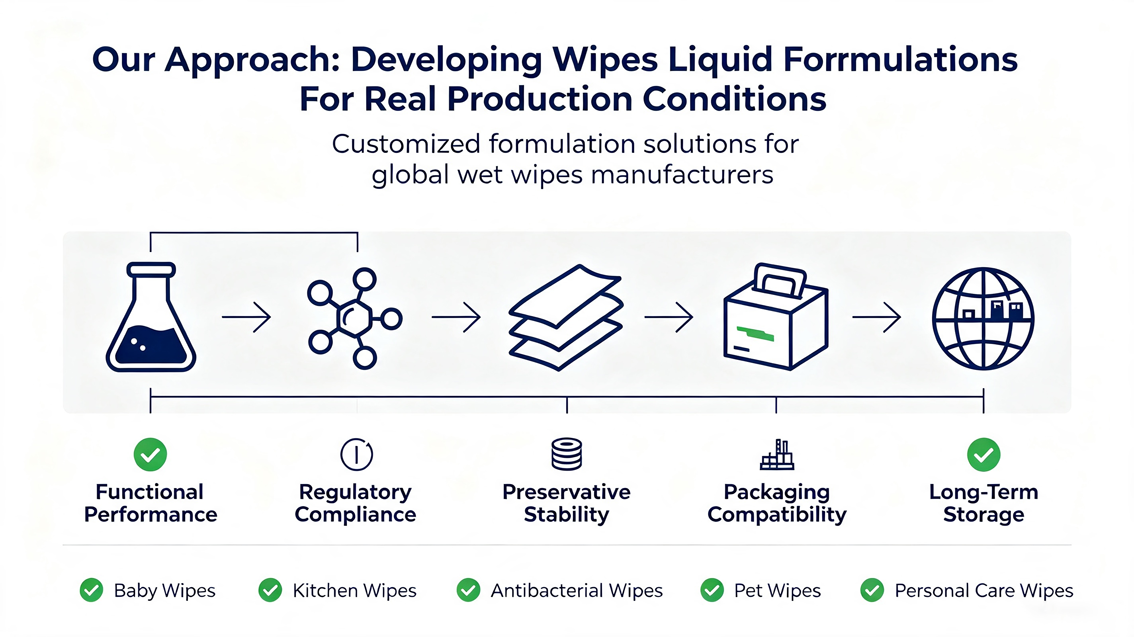
Our Approach: Developing Wipes Liquid Formulations For Real Production Conditions
we focus on providing customized wipes liquid formulation solutions for global wet wipes manufacturers.
Our development process considers:
✓ Functional performance requirements
✓ Global regulatory compliance
✓ Preservative system stability
✓ Packaging compatibility
✓ Long-term storage performance
Whether you are producing:
Baby wipes
Kitchen wipes
Disinfecting wipes
Antibacterial wipes
Pet wipes
Personal care wipes
we help customers develop stable and production-ready wipes liquid solutions.
Conclusion
When functional wet wipes experience packaging film delamination, the problem is not always caused by the film itself.
In many cases, the root cause is:
The adhesive system, adhesive application amount, and wipes liquid formulation are not properly matched.
Baby wipes may work perfectly because their formula is mild. However, functional wipes require a higher level of compatibility testing between the liquid formulation and packaging structure.
For wet wipes manufacturers, choosing the right wipes liquid formulation supplier means not only improving product performance but also reducing packaging failure risks and protecting long-term market reputation.