





 English
 USA
USA
 西班牙语
西班牙语
 俄罗斯
俄罗斯
 葡萄牙
葡萄牙
 印尼
印尼
 巴基斯坦
巴基斯坦
 尼日利亚
尼日利亚
 孟加拉
孟加拉
 墨西哥
墨西哥
 越南
越南
 日本
日本
 韩国
韩国
 沙特阿拉伯
沙特阿拉伯

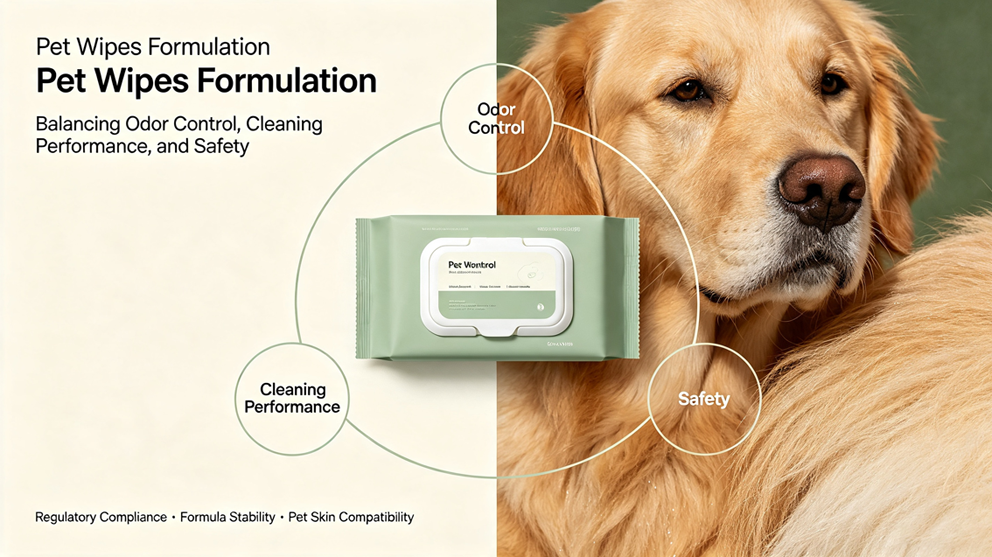
Introduction: The Pet Wipes Market Is Growing Rapidly, and Formulation Has Become the Key Competitive Factor
With the continuous growth of the global pet care market, pet wipes have become an essential product for pet cleaning, daily care, and outdoor use.
For wet wipes manufacturers, developing a successful pet wipes product is not simply about adding cleansing ingredients and fragrances.
Pet skin is different from human skin, and pets may lick their fur and skin after use. Therefore, pet wipes liquid formulation needs to achieve a balance between multiple requirements:
Effective cleaning of dirt and residues on pet skin and fur
Odor control to improve user experience
Long-term safety for frequent use
Compliance with regulations in different markets
Formula stability and production compatibility
Finding the right balance between cleaning performance, odor control, and safety is one of the biggest challenges in pet wipes formulation development.
1. Core Requirements of Pet Wipes Formulation
1.1 Cleaning Performance: Removing Dirt While Avoiding Irritation
During daily activities, pets can accumulate:
Dirt and dust
Excess oils and sebum
Food residues
Odor sources trapped in fur
Contamination from waste
Therefore, pet wipes liquid formulation needs to provide effective yet gentle cleansing performance.
Common Cleansing Systems:
Mild Surfactant Systems
Examples:
APG (Alkyl Polyglucoside)
Decyl Glucoside
Coco Glucoside
These non-ionic surfactants offer:
Low irritation potential
Effective cleansing ability
Better suitability for sensitive pet skin
Compared with aggressive cleansing agents, mild surfactant systems are more suitable for products designed for frequent pet care.
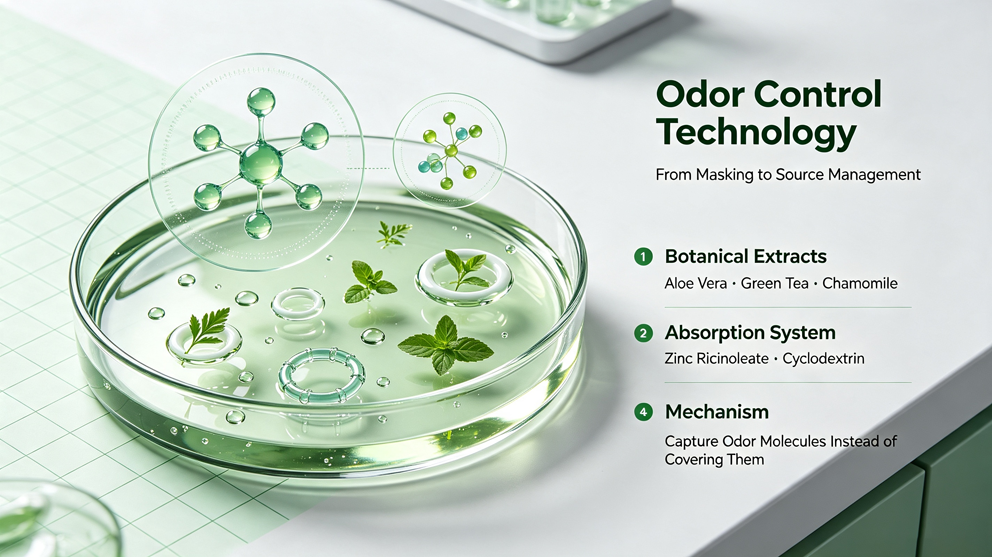
2. Odor Control Technology: More Than Masking Odors, It Requires Managing Odor Sources
Many traditional pet wipes rely on high levels of fragrance to cover unpleasant odors. However, this approach may result in:
Overly strong fragrance
Potential pet sensitivity
Reduced user experience
Modern pet wipes formulations focus more on odor control technology rather than simply masking odors.
Key approaches include:
2.1 Botanical Extracts for Odor Control
Common ingredients include:
Aloe Vera Extract
Green Tea Extract
Chamomile Extract
These botanical ingredients can provide:
Soothing benefits
A fresh feeling
Support for odor reduction
2.2 Absorption-Based Odor Control Systems
Examples:
Zinc Ricinoleate
Cyclodextrin
Mechanism:
Instead of simply covering unpleasant smells, these ingredients help absorb or capture odor-causing molecules.
This technology is becoming increasingly popular in premium pet care products.
3. Safety Design: The Most Important Factor in Pet Wipes Formulation
The biggest difference between pet wipes and other cleaning wipes is:
Pets may lick their skin and fur after application, so formulation safety requirements are higher.
3.1 Avoiding Potentially Irritating Ingredients
Pet wipes formulations usually require careful control of:
High concentrations of alcohol
Strong oxidizing agents
Highly irritating preservatives
Strong fragrance systems
This is especially important for:
Puppies
Kittens
Pets with sensitive skin
Gentle formulation design is essential for these products.
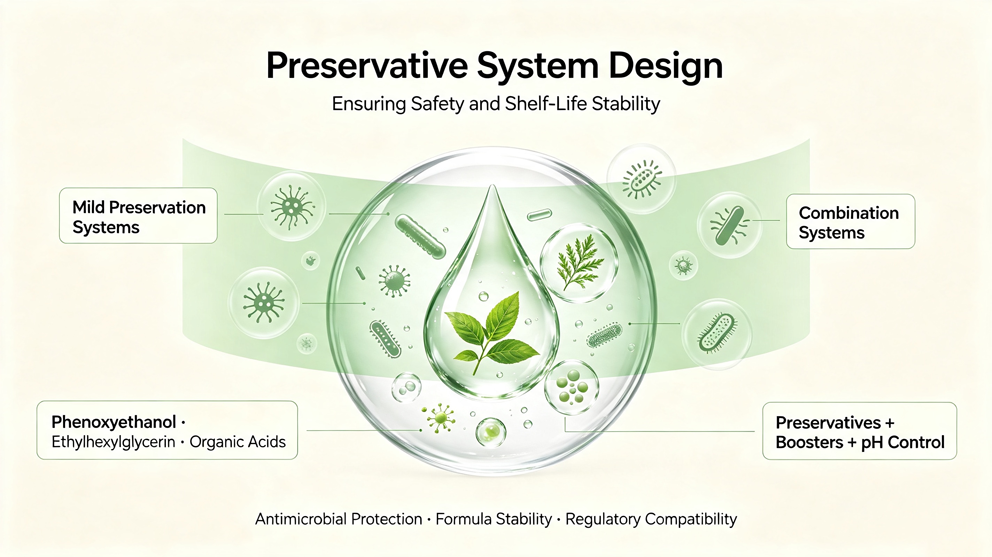
4. Preservative System Design: Ensuring Safety and Shelf-Life Stability
Pet wipes liquid formulations usually contain a high percentage of water, along with:
Botanical extracts
Humectants
Functional ingredients
These environments can support the growth of:
Bacteria
Mold
Yeast
Therefore, a properly designed preservative system is critical.
Common Preservative Solutions:
Mild Preservation Systems
Examples:
Phenoxyethanol
Ethylhexylglycerin
Organic acids
Advantages:
Widely accepted by global regulations
Suitable for sensitive care products
Compatible with various formulation systems
Combination Preservative Systems
By combining:
Preservatives + Preservation Boosters + pH Control
the overall antimicrobial performance can be improved.
Examples:
Phenoxyethanol + Ethylhexylglycerin
Benzoic Acid-based systems
Compared with single preservatives, combination systems generally provide better stability and broader protection.
5. Moisturizing and Skin Care Benefits: Adding More Value to Pet Wipes Products
In addition to cleansing performance, high-quality pet wipes often include skin-conditioning ingredients.
Common functional ingredients include:
Humectants
Examples:
Glycerin
Propylene Glycol
Betaine
Benefits:
Helps reduce skin dryness
Improves wiping comfort
Soothing Ingredients
Examples:
Aloe Vera
Panthenol
Allantoin
Benefits:
Helps support sensitive skin
Reduces dryness after cleaning
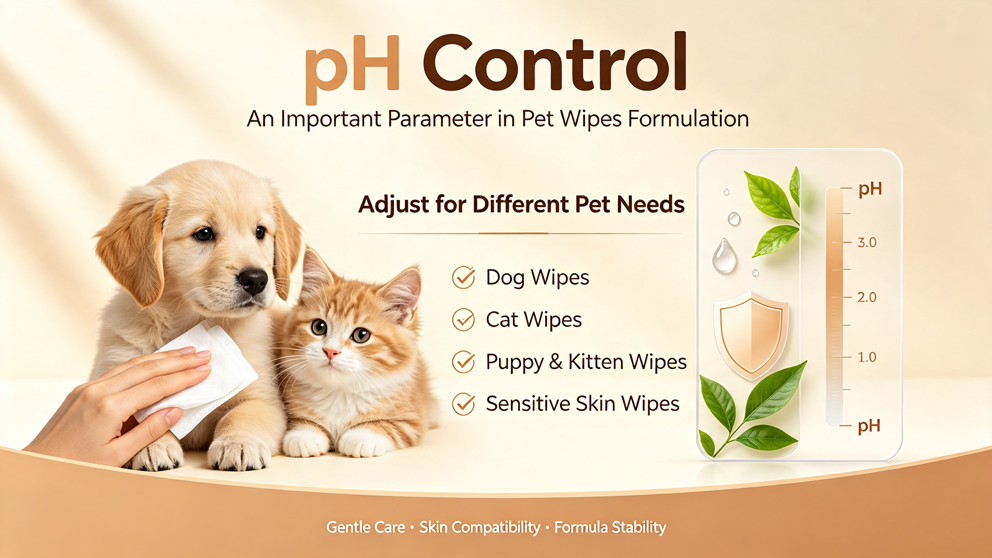
6. pH Control: An Important Parameter in Pet Wipes Formulation
Pet skin conditions are different from human skin.
A properly adjusted pH range helps:
Reduce irritation risks
Improve skin compatibility
Maintain formulation stability
During pet wipes liquid formulation development, adjustments should be made according to different product types:
Dog wipes
Cat wipes
Puppy and kitten wipes
Sensitive skin care wipes
7. Common Questions During Pet Wipes Formulation Development
Question 1:
Does a stronger fragrance mean better odor control?
No.
Excessive fragrance can only temporarily cover unpleasant smells and does not solve the actual odor source.
A high-quality pet wipes formulation should combine:
Gentle cleansing
Odor control technology
Botanical care ingredients
to provide a longer-lasting fresh feeling.
Question 2:
Does using stronger preservatives make products safer?
No.
A preservative system needs to balance:
Microbial protection performance
Skin safety
Regulatory requirements
Overusing preservatives may increase the risk of irritation.
Question 3:
Can human wipes formulations be directly used for pet wipes?
Generally, it is not recommended.
Pet wipes require consideration of:
Licking risk
Fur environment
Pet skin characteristics
Frequency of use
A dedicated formulation should be developed specifically for pet care applications.
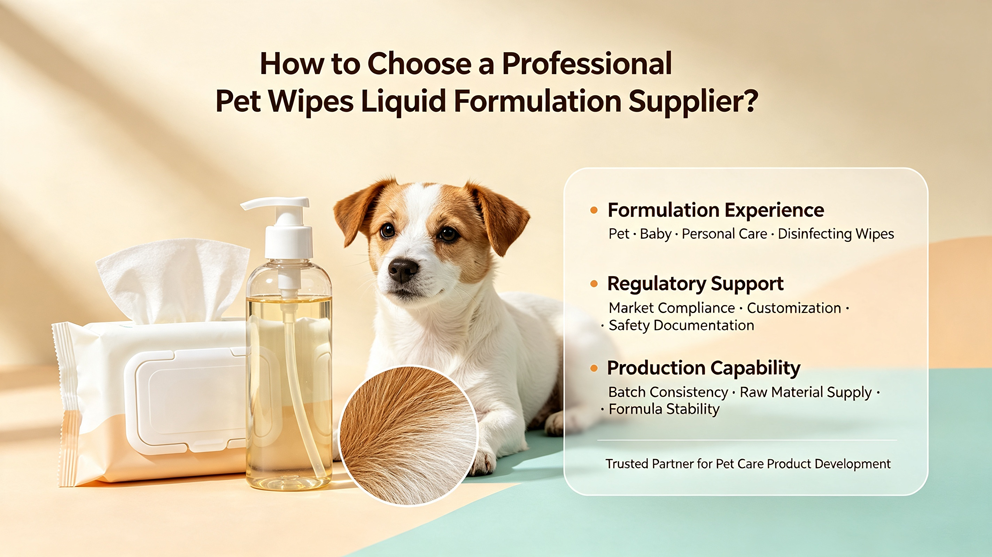
8. How to Choose a Professional Pet Wipes Liquid Formulation Supplier?
For wet wipes manufacturers, an experienced pet wipes formulation supplier should have:
1. Extensive Wet Wipes Formulation Development Experience
Including:
Pet wipes liquid
Baby wipes liquid
Personal care wipes liquid
Disinfecting wipes liquid
2. Global Regulatory Support Capability
A professional supplier should be able to provide:
Ingredient recommendations
Formula customization
Safety documentation support
based on different target markets.
3. Stable Large-Scale Production Capability
Ensuring:
Consistent batch quality
Reliable raw material supply
Formula consistency
Conclusion: A Successful Pet Wipes Formulation Is a Balance Between Cleaning, Safety, and User Experience
As competition in the pet wipes market continues to increase, simple cleaning performance is no longer enough to meet brand expectations.
A successful pet wipes liquid formulation needs to achieve:
Effective cleaning performance
Long-lasting odor control
Gentle and safe application
Stable formulation performance
Compliance with global market requirements
For wet wipes manufacturers, partnering with a professional wipes liquid formulation supplier can help develop pet care products that better meet market demands and consumer expectations.